A boutique fitness studio in JLT posts consistently on Instagram. Their reels get thousands of views, their follower count climbs every month, and their DMs are full of inquiries. Yet when a potential client searches “gym in JLT” on Google, the studio is nowhere on the first page while a smaller, less active competitor ranks near the top.
This confuses a lot of Dubai business owners. If social media is where the engagement is happening, shouldn’t it also be helping search rankings? The relationship between social media and SEO is real, but it’s more indirect than most people assume. Understanding how “social signals” actually work and where they genuinely help can save a business from misallocating time and budget.
What Are Social Signals?
Social signals refer to the engagement a piece of content receives on social media platforms likes, shares, comments, follower counts, and overall visibility. In SEO conversations, the term usually comes up in one of two contexts:
Direct ranking factor: The idea that Google directly uses metrics like Facebook likes or Instagram shares as part of its ranking algorithm.
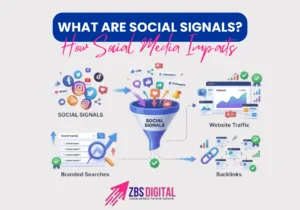
Indirect influence: The idea that social media activity creates conditions that support SEO indirectly, such as increased brand visibility, more website traffic, and a higher chance of earning backlinks.
The distinction matters a great deal, because the answer to “does social media affect SEO” is different depending on which of these two things you’re asking about.
Visual Suggestion: Diagram showing social signals as an indirect pathway feeding into SEO factors like traffic, brand searches, and backlinks
Does Google Use Social Media as a Direct Ranking Factor?
Based on publicly available guidance from Google, social media engagement metrics like share counts or follower numbers are not confirmed as direct ranking signals. Google’s own documentation on how Search works focuses on factors such as relevance, content quality, usability, and authoritative links rather than social metrics.
This is worth stating clearly because a lot of Dubai businesses invest in social media purely for SEO reasons, only to be disappointed when rankings don’t move. Posting more on Instagram will not, by itself, push a website up the search results for a competitive term like “digital marketing agency in Dubai.”
That said, dismissing social media as irrelevant to SEO would be a mistake too. The real impact happens indirectly, and for UAE businesses in particular, that indirect impact can be significant.
How Social Media Actually Supports SEO (Indirectly)
1. Increased Brand Visibility and Branded Searches
When more people see a business on social media, some of them later search for that business by name on Google. Branded search volume people typing your business name directly into Google is a positive signal of trust and relevance that can support overall SEO performance over time.
2. More Opportunities for Backlinks
Content that performs well on social media often gets noticed by bloggers, journalists, and other website owners, who may then link to it from their own sites. Backlinks remain one of the strongest ranking factors in SEO, and social media can act as a discovery channel that leads to them, even though the social share itself isn’t the ranking factor.
3. Traffic and Engagement Signals
While social shares aren’t a direct ranking factor, the traffic that comes from social media does interact with your website. If visitors from Instagram or LinkedIn land on a page, spend time reading it, and explore other pages, that positive user behavior can reinforce the value of well-optimized, genuinely useful content.
4. Faster Content Discovery
New content sometimes gets crawled and indexed faster when it’s shared and discussed across social platforms, particularly if it earns early engagement or is picked up by other sites. This isn’t a guarantee, but it can shorten the gap between publishing and being found by Google.
5. Local Business Trust Signals
For Dubai and UAE businesses competing on local search terms, an active and consistent social media presence adds to the overall picture of legitimacy that both customers and search engines associate with an established local brand especially when it’s consistent with details on your Google Business Profile and website.
Why This Matters More for Dubai and UAE Businesses
The UAE has one of the highest social media penetration rates in the world, and Dubai consumers frequently research businesses across multiple platforms before making a decision checking Instagram or TikTok alongside Google Search. A few UAE-specific dynamics make the social-SEO relationship particularly relevant here:
High mobile and social media usage: means many potential customers discover a business socially before ever searching for it on Google.
Visual industries: like hospitality, real estate, beauty, and retail benefit heavily from social platforms as a discovery layer that eventually drives branded search.
Review and reputation overlap: positive social engagement often correlates with more Google reviews, which do factor into local search visibility.
Arabic and English audiences: frequently split their attention across different platforms, meaning a bilingual social strategy can widen the funnel that eventually feeds search demand.
Do You Have This Problem?
Ask yourself:
– Does your business get social media engagement but little to no organic search traffic?
– Do people mention finding you “on Instagram” but rarely search for your business by name on Google?
– Is your social content well-produced but never linked to or shared by other websites?
– Are your social media and SEO efforts run by separate teams with no shared strategy?
If any of this sounds familiar, the two channels likely aren’t reinforcing each other the way they could be.
How to Align Social Media and SEO Strategically
1. Publish content worth linking to. Guides: original data, and genuinely useful resources are far more likely to earn backlinks than promotional posts.
2. Use social media to amplify, not replace, SEO content: Share blog posts and landing pages on social platforms to give them an early traffic and visibility boost.
3. Keep branding consistent across platforms: Consistent business name, contact details, and messaging across social profiles and your website support the trust signals search engines associate with legitimate local businesses.
4. Encourage reviews through social channels: Directing engaged social followers toward leaving Google reviews strengthens local SEO in a way that pure social metrics can’t.
5. Track branded search growth over time: Use tools like Google Search Console to monitor whether branded search queries increase alongside social media growth.
Visual Suggestion: Simple funnel graphic showing social media awareness leading to branded search, website traffic, and backlinks
Common Mistakes Businesses Make
– Treating social media likes and shares as if they directly move Google rankings.
– Running social media and SEO as completely disconnected strategies.
– Producing social content with no link back to the website.
– Ignoring branded search data that could reveal social media’s real contribution to SEO.
– Assuming a large following automatically translates into search visibility.
Key Takeaways
– Social signals (likes, shares, follower counts) are not confirmed as direct Google ranking factors.
– Social media supports SEO indirectly through brand visibility, backlink opportunities, and increased branded search.
– Dubai and UAE businesses, given high social media usage, are well-positioned to benefit from an integrated approach.
– The goal isn’t to chase social metrics for SEO’s sake, but to use social media as a discovery channel that feeds long-term search visibility.
FAQs
Do Facebook likes or Instagram followers directly improve Google rankings?
No confirmed evidence supports this. Google’s ranking systems focus on content relevance, quality, and authoritative links rather than social engagement metrics.
Should I stop investing in social media if it doesn’t directly affect SEO?
No. Social media plays a valuable indirect role by building brand awareness, driving branded searches, and creating opportunities for backlinks and referral traffic.
Can viral social media content help my website rank higher?
It can help indirectly if the content earns backlinks or drives significant referral traffic and branded search interest, but virality alone doesn’t guarantee ranking improvements.
How can I tell if my social media is helping my SEO?
Monitor branded search volume in Google Search Console, track referral traffic from social platforms in analytics, and watch for any backlinks generated after social content goes live.
Does this apply differently to local Dubai businesses versus e-commerce brands?
The core principle is the same, but local businesses benefit more from social-driven trust signals like reviews and local brand recognition, while e-commerce brands often see more direct referral traffic and backlink opportunities from shareable content.
Bring Your Social and Search Strategy Together
If your social media presence isn’t translating into search visibility, the gap is usually strategic rather than a matter of posting more. A coordinated approach where your website, content, and social channels all work toward the same goals tends to produce far better long-term results than treating them separately.
Zbs Digital are built to work together, helping Dubai and UAE businesses turn social media engagement, website traffic (SEO) into real, measurable search visibility.